The project began with a clear understanding of the context: the development stage of the gambling industry, the economic conditions of the country, the character of the site, and the expectations of its visitors. These factors informed the architectural strategy and established the framework within which the design could operate.
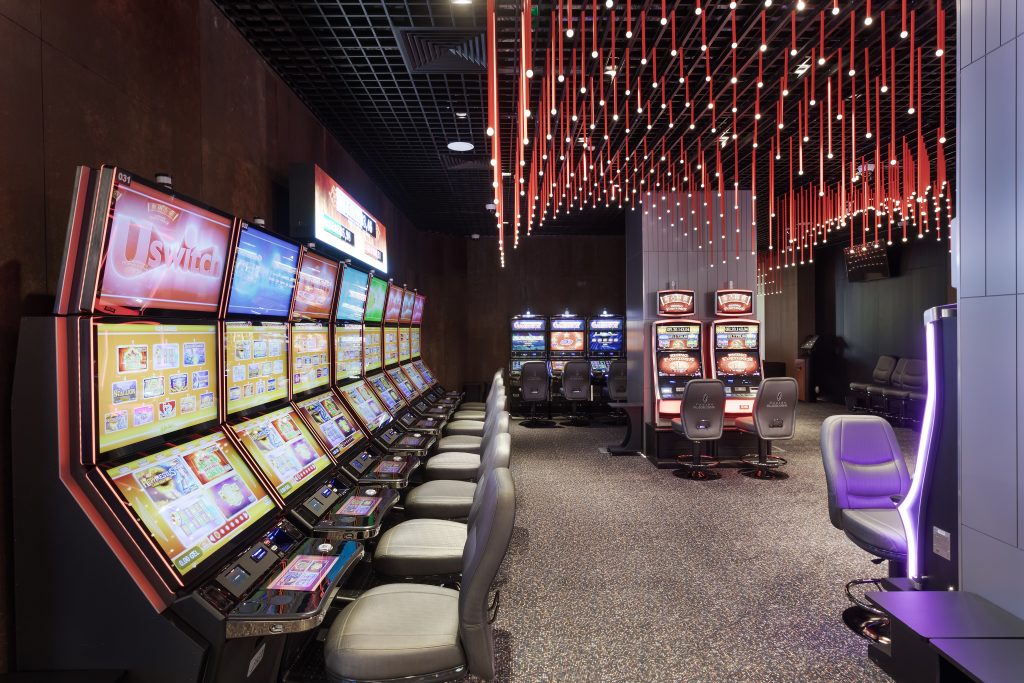
The space serves a diverse public. People of different ages, occupations, and backgrounds come to spend time, to pause, to engage in leisure. The design supports this intention. Interior elements—light, sound, and spatial layout—are calibrated to encourage presence without excess, creating a setting that is both welcoming and functional for local clients and international visitors alike.
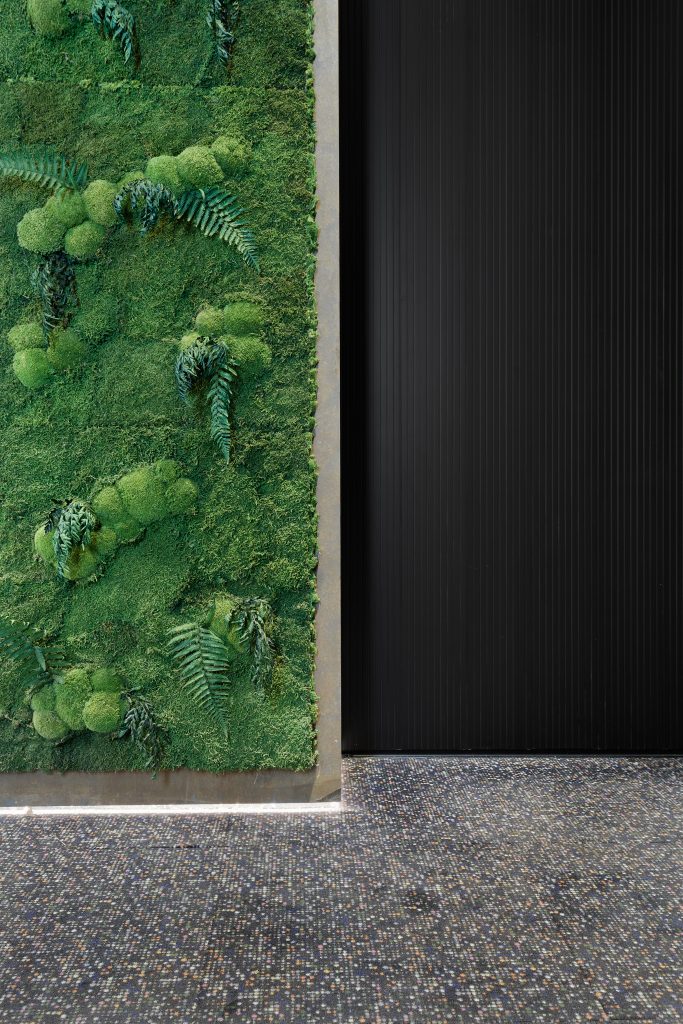
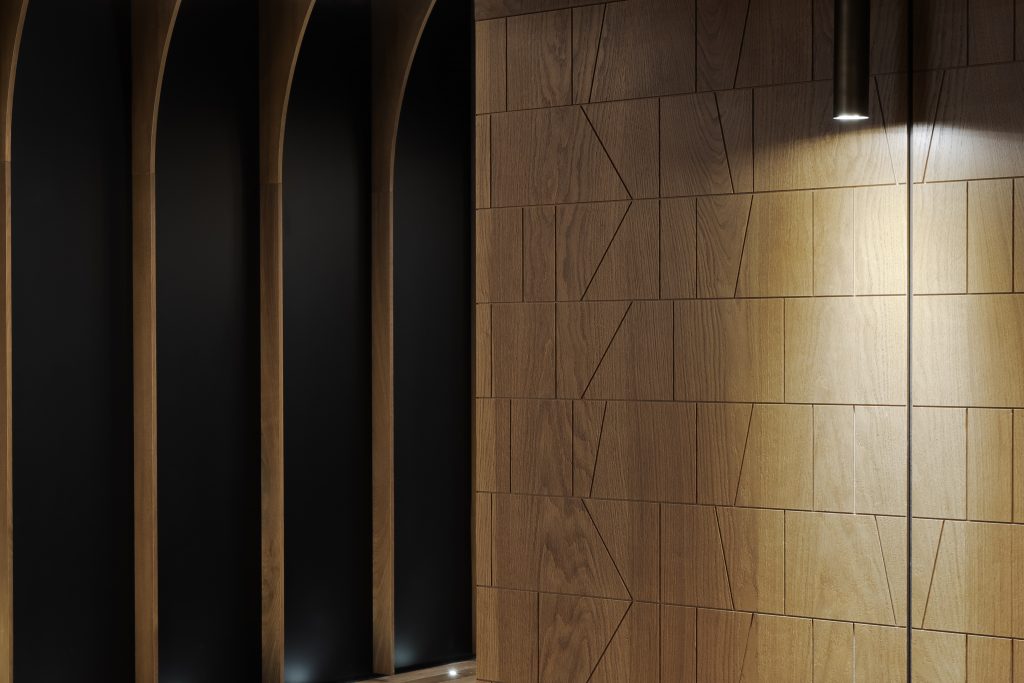
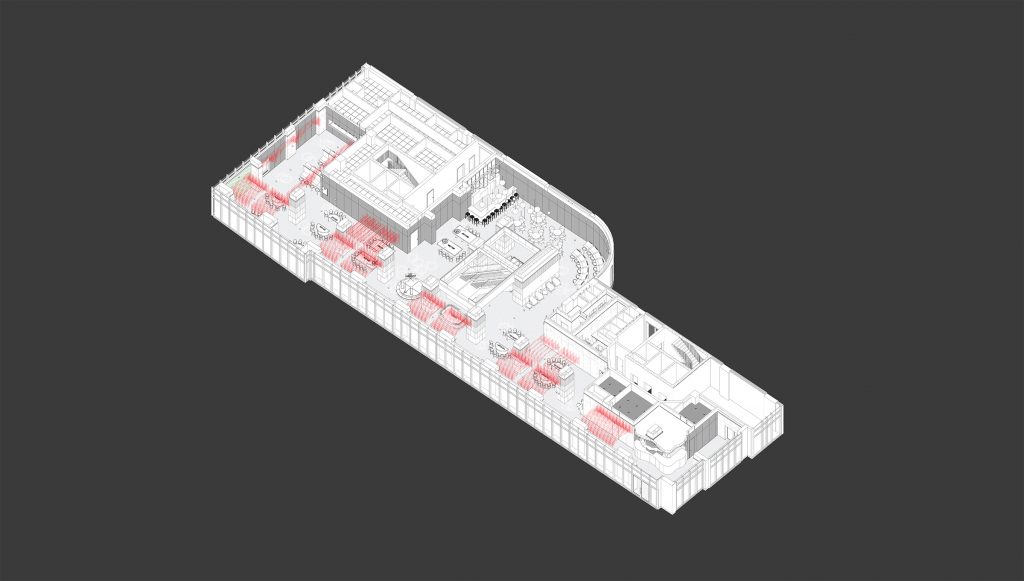
The architectural framework is flexible. Ceiling and floor elements are adaptable, walls are movable, and the plan can respond to operational requirements. The raised floor system conceals services while allowing reconfiguration over time. Carpet inlayed into modular floor panels echoes the pattern of the brand, while panelized walls can be adjusted, mixed, or refined, maintaining both continuity and adaptability.
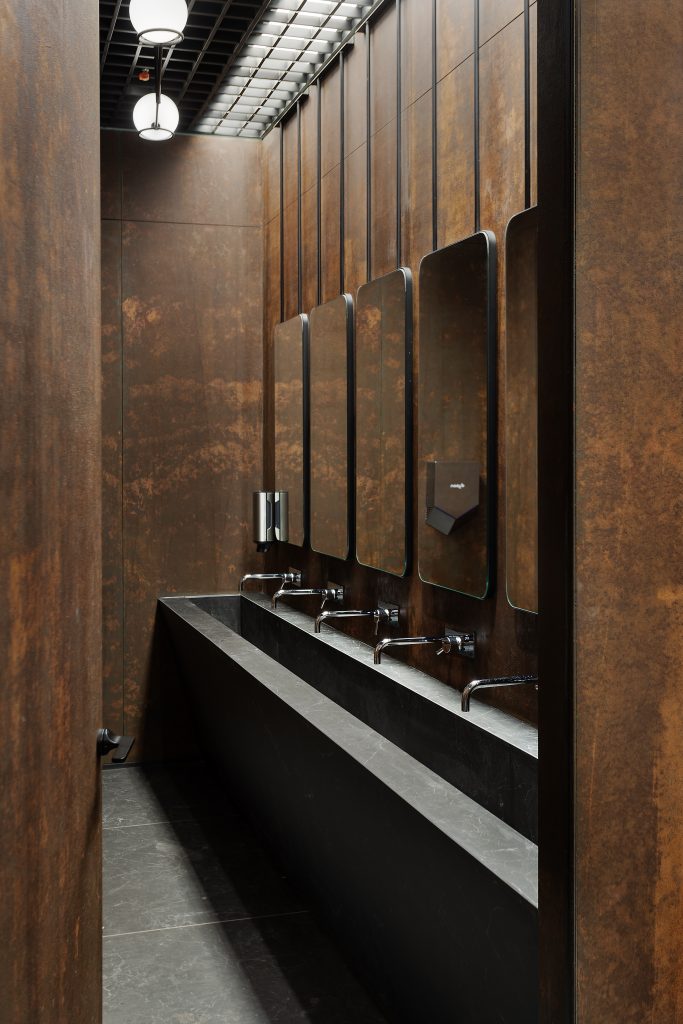
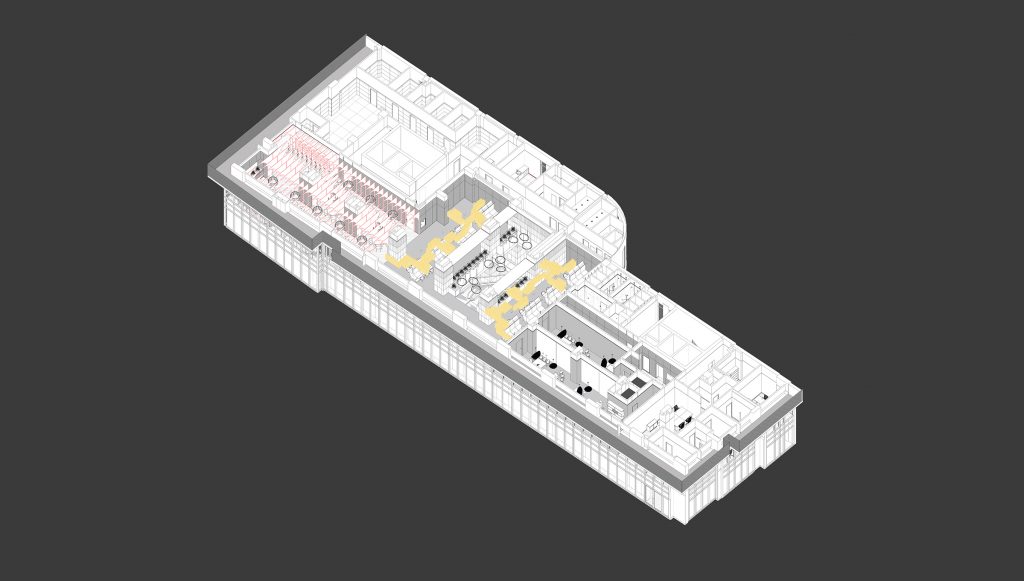
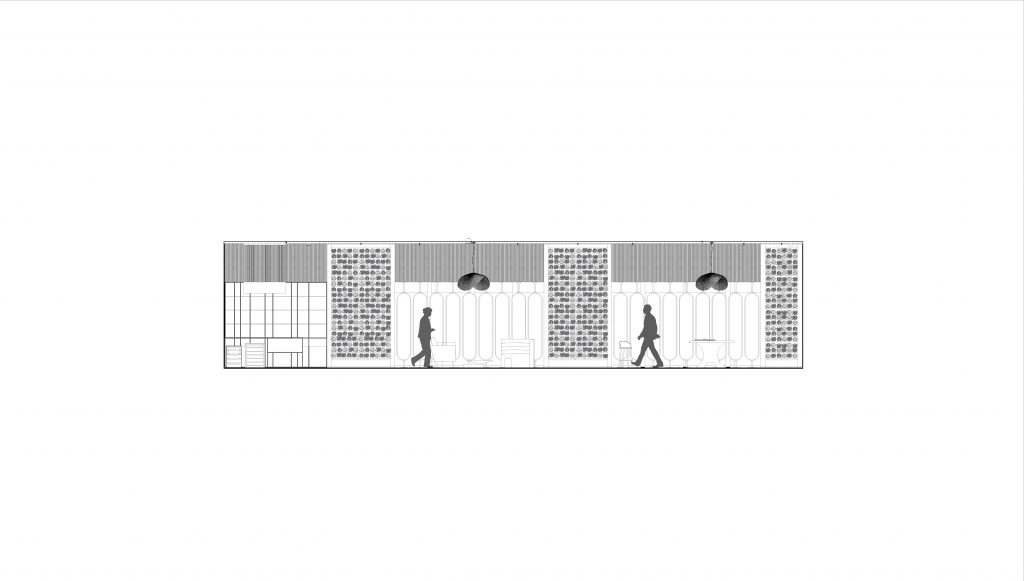
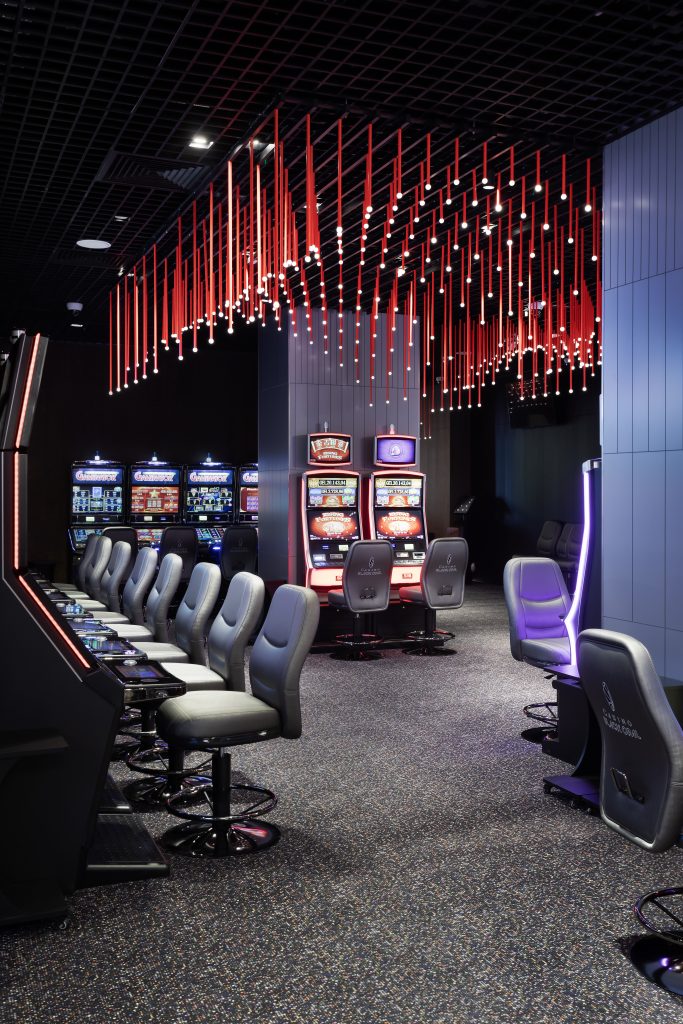
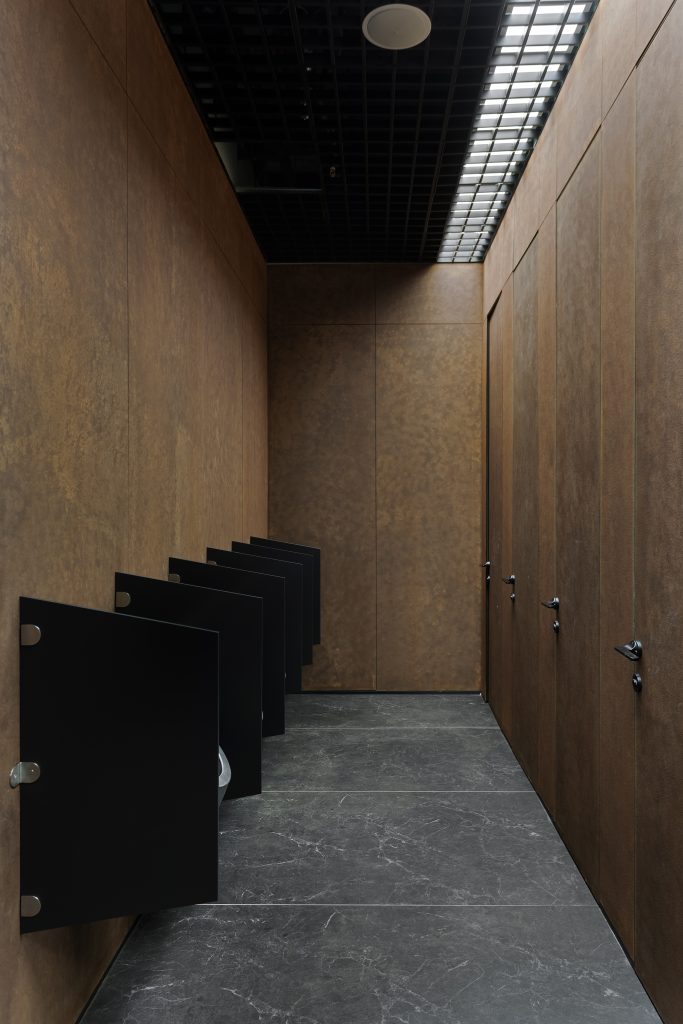
The ceiling is constructed of expanded mesh. Mechanical, electrical, and plumbing systems remain visible behind it, integrated as part of the composition rather than hidden. Black mesh defines the industrial character of the space, while lighting, ventilation, and safety systems are seamlessly incorporated. Wood finishes add subtle warmth, softening the overall palette.
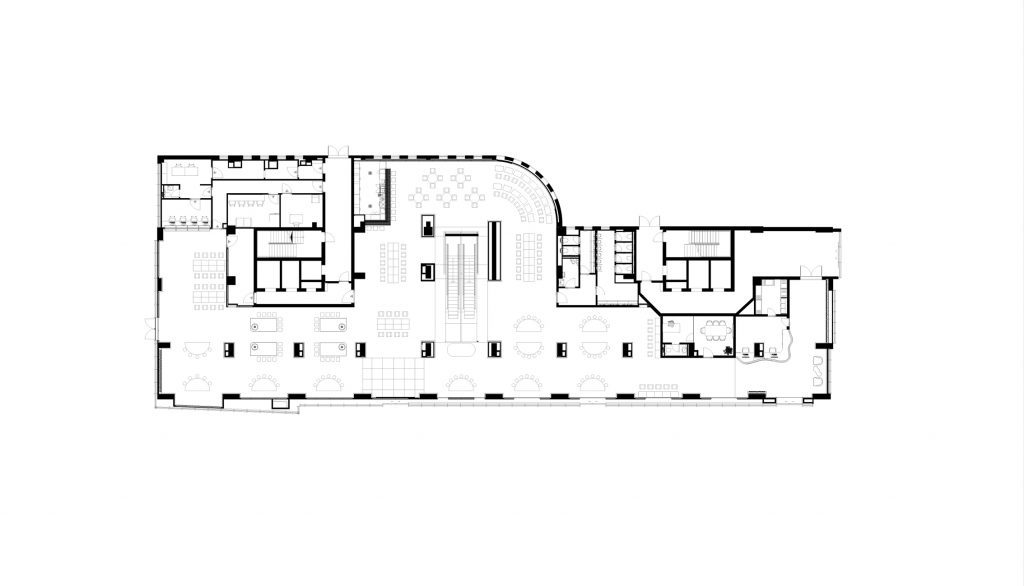
The main gaming floor is conceived as a continuous field, with zones of varying intensity and light that guide movement without imposing direction. Curved forms and reflective surfaces introduce a quiet sense of elegance, and colour is applied with restraint, emphasizing alertness and clarity rather than spectacle.
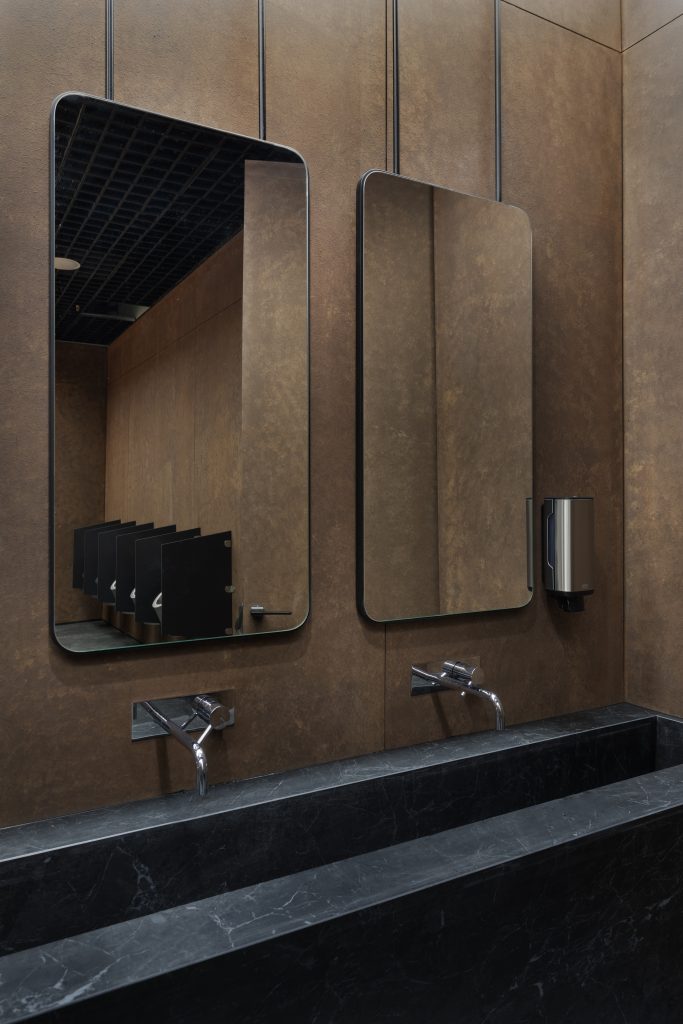
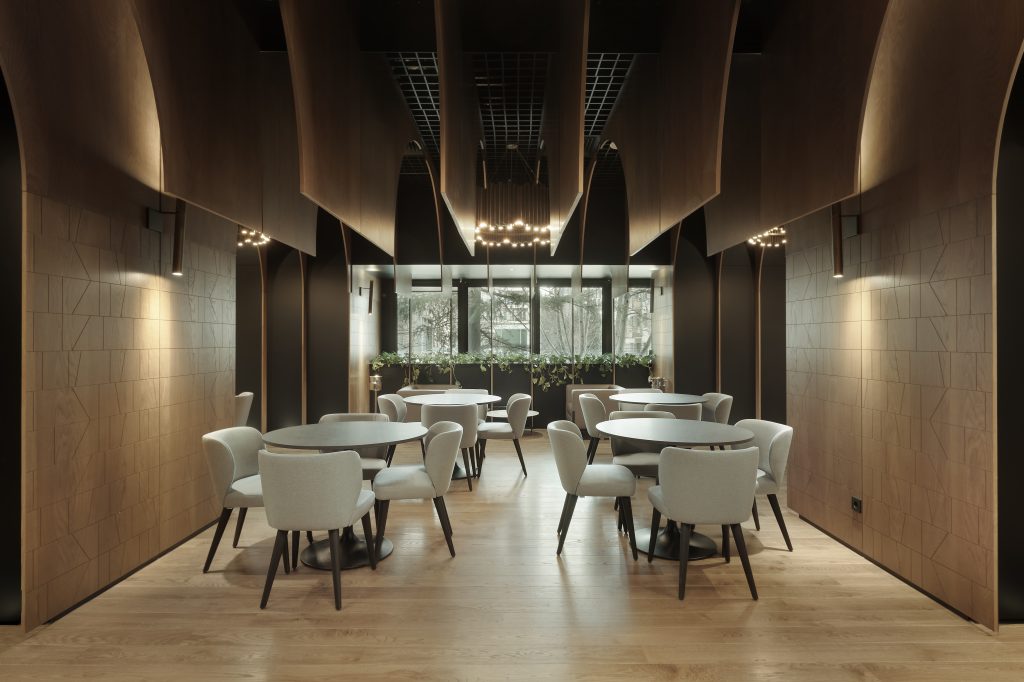
Acoustic control is carefully considered. Sound-absorbing panels maintain clarity and comfort, particularly in VIP areas. Chrome and oxidized metal finishes are used selectively to punctuate the space without dominating it.
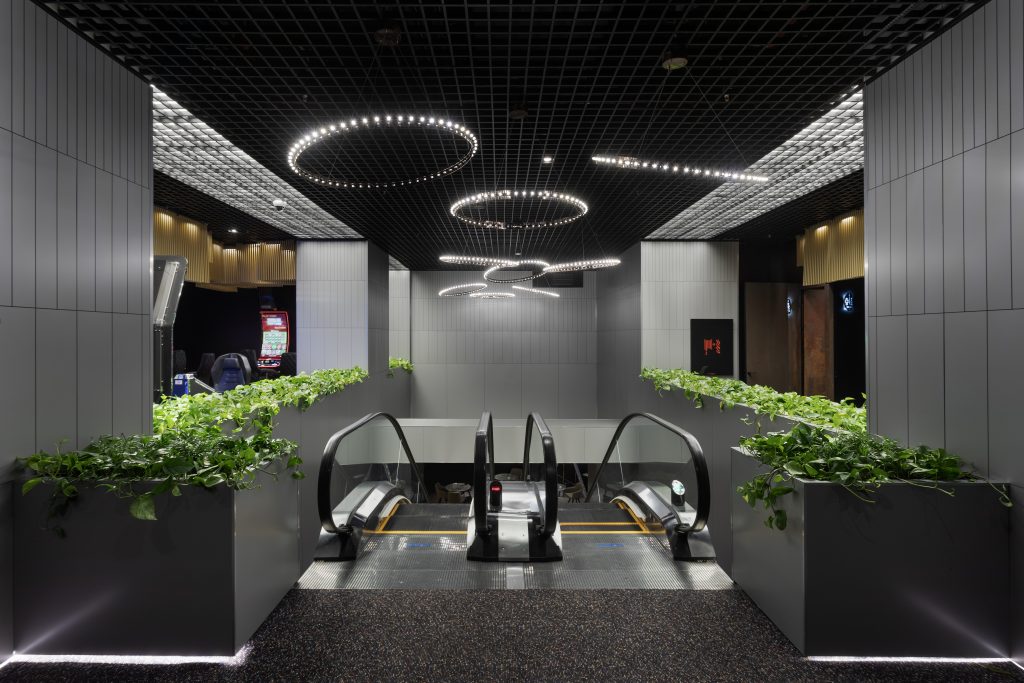
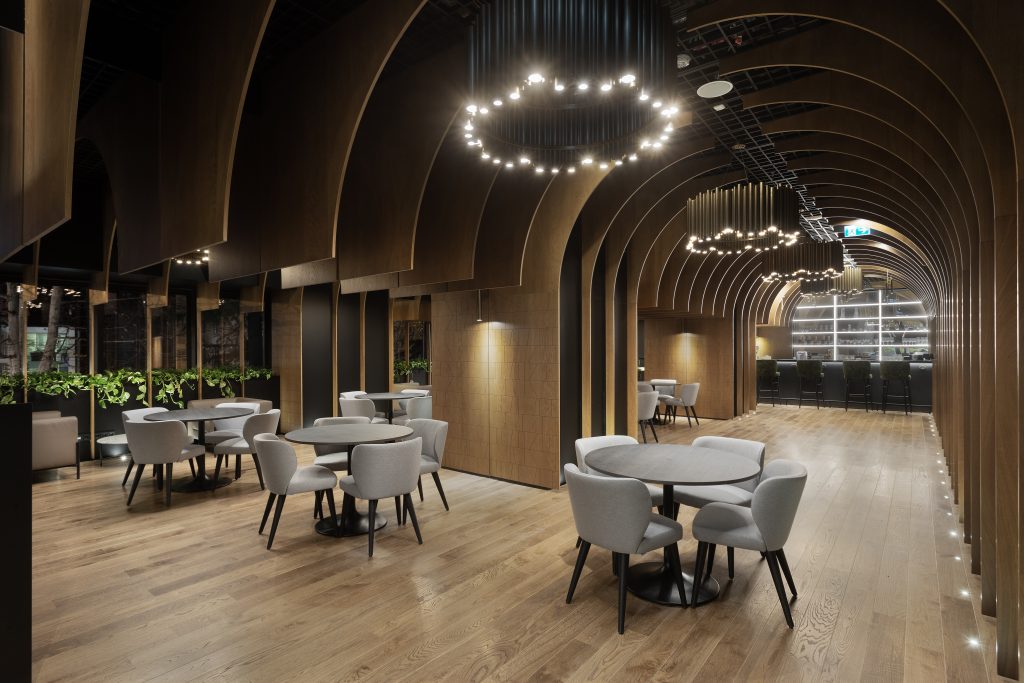
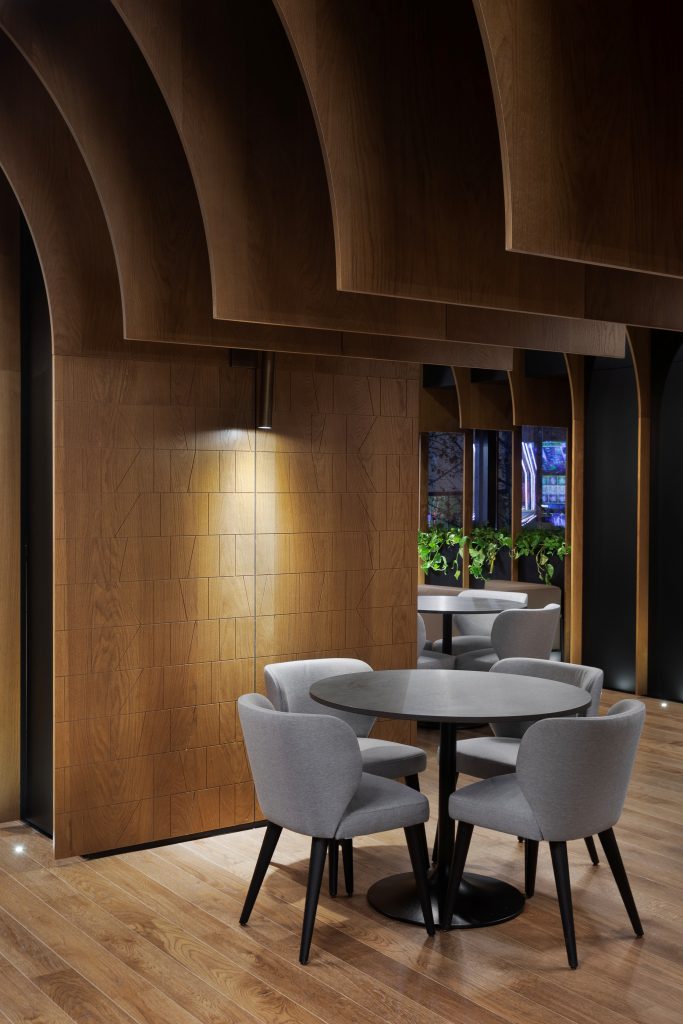
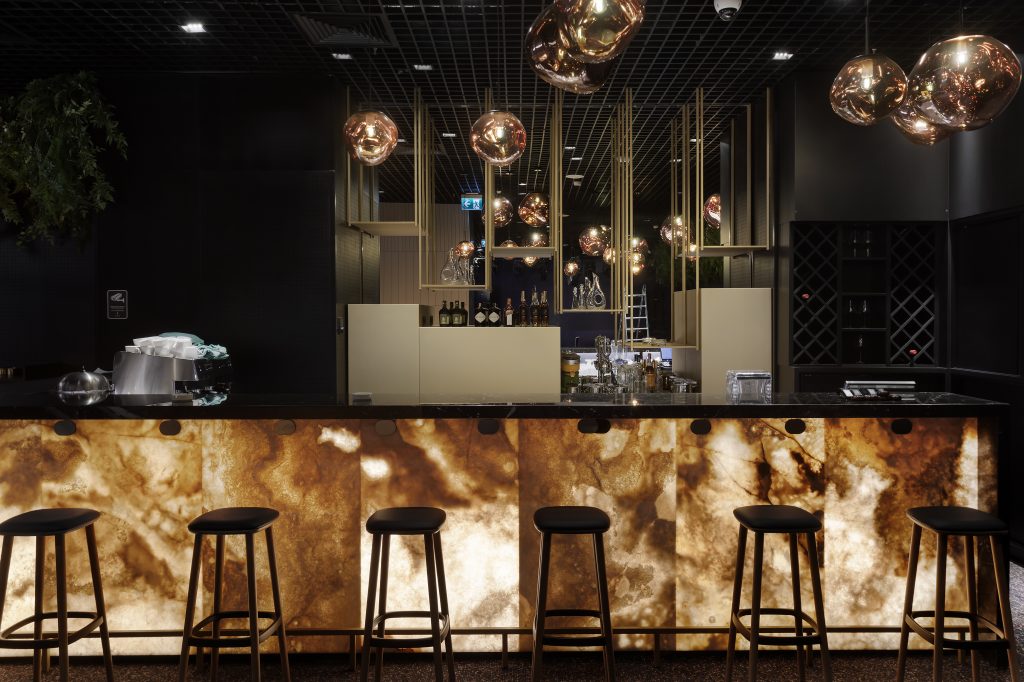
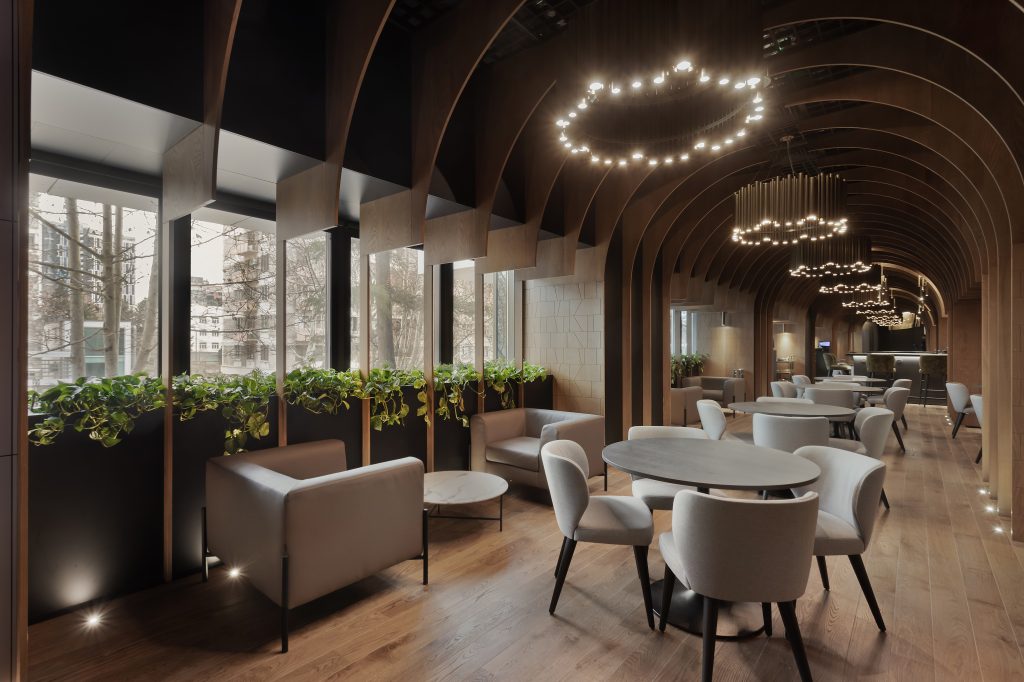
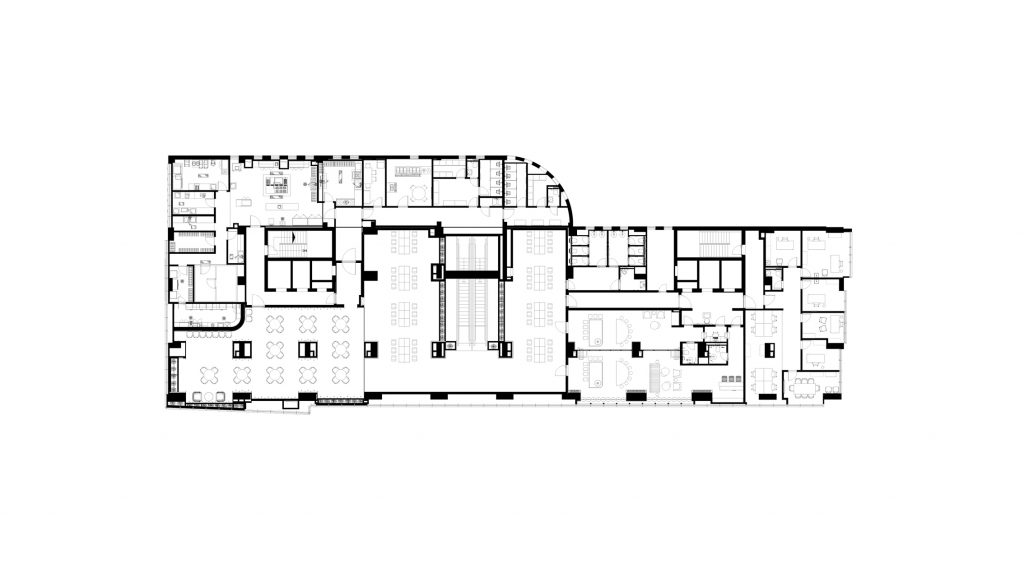
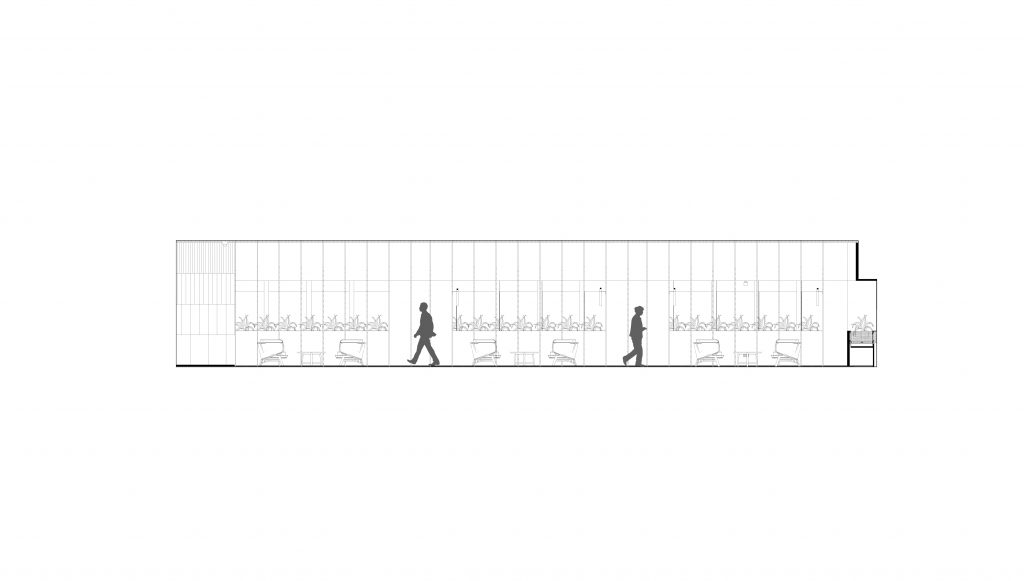
The vertical connection between levels is defined by a transparent escalator, maintaining openness and continuity. On the second floor, zones are clearly organized: slots, VIP areas, restaurant, and operational spaces. The restaurant is the only space with natural daylight, enhanced by wood and planting, including a small chili garden that introduces a subtle ecological and culinary dimension.
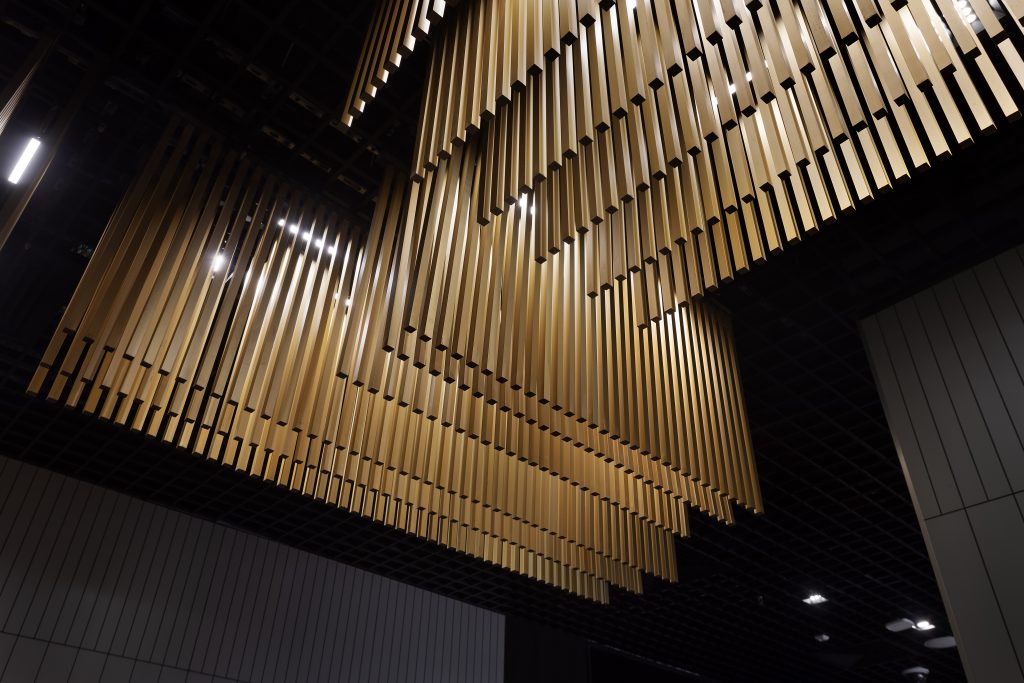
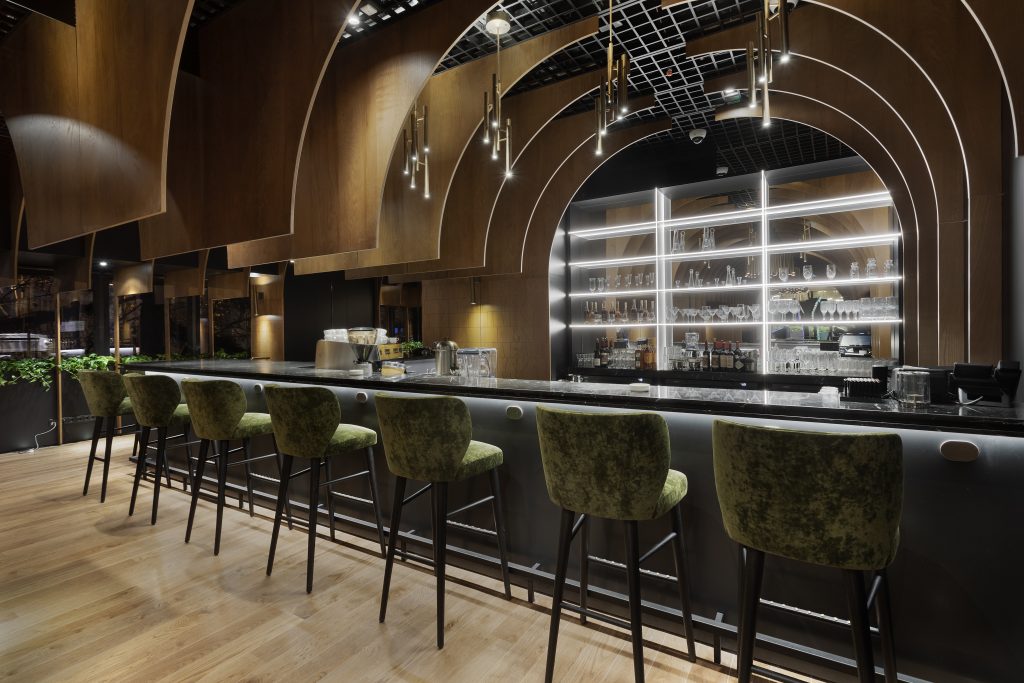
Lighting is layered and deliberate. Base illumination ensures even clarity, while discrete decorative elements—suspended LEDs arranged in wave-like patterns—introduce spatial richness without theatrics. The effect is precise, restrained, and coherent.
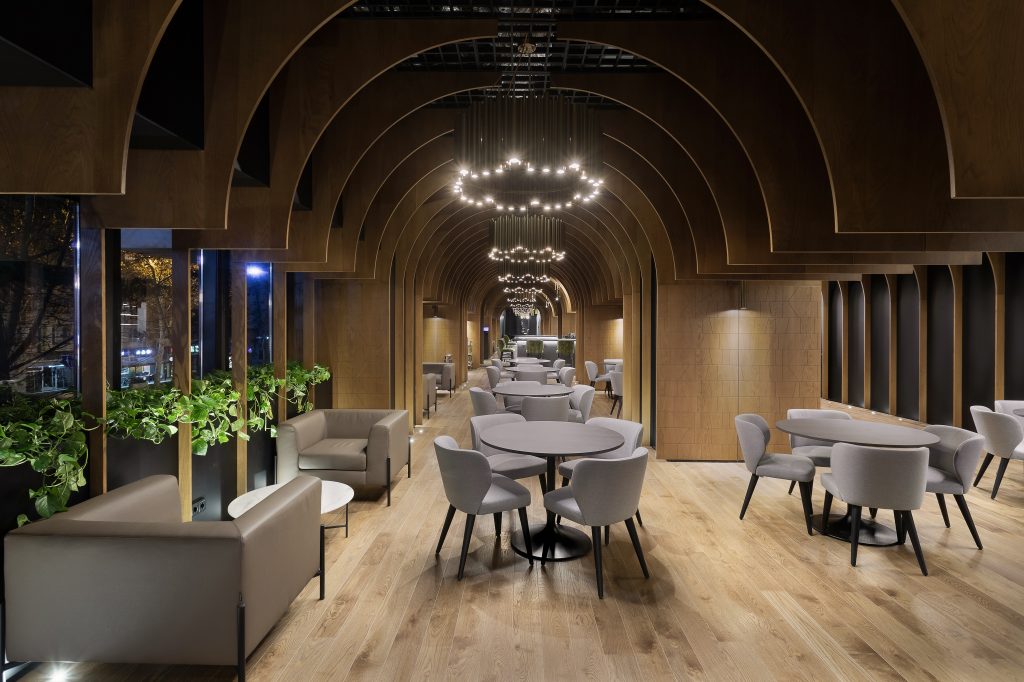
The design prioritizes functionality, flexibility, and material refinement. Each element is considered in relation to proportion, texture, and spatial experience. Movement is measured, light is controlled, and the interior supports extended presence while remaining elegant, understated, and enduring.